
Soft Roof Cleaning
Can the Black Streaks on Your Roof Spread to Your Neighbor's House?
The surprising science of airborne roof algae and how it travels from home to home.
September 25, 2026
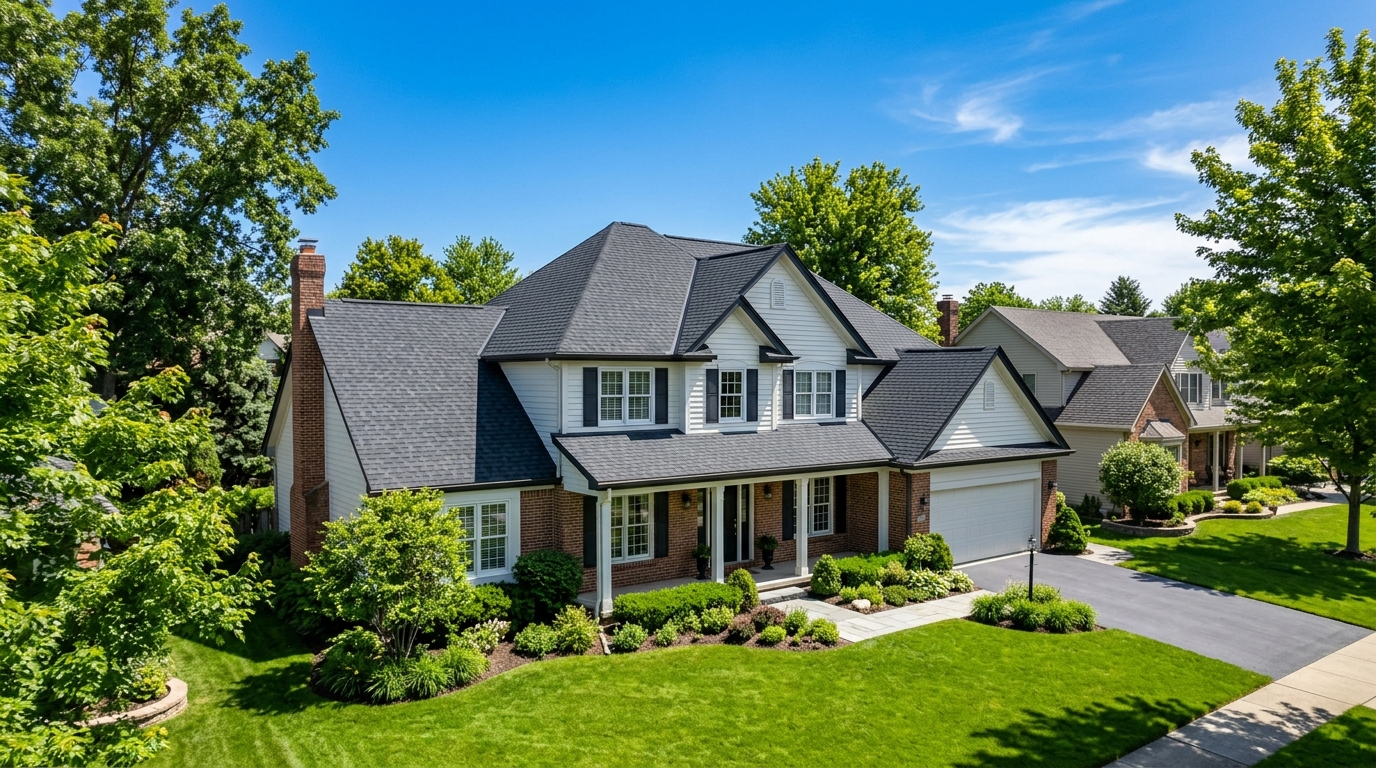
Have you ever looked at a house in your neighborhood and noticed dark, vertical smudges running down the shingles, only to notice the exact same dark marks popping up on the home next door a few months later? It looks almost like soot or dirt rolling off the peak of the house. In reality, those streaks are actually alive, and they are capable of traveling down the block on a breeze.
What Are Those Dark Roof Streaks Really?
To understand whether those marks can spread, we first have to bust a common myth: those dark stains are not mold, dirt, or chimney soot. They are actually a prehistoric type of blue-green algae known by scientists as Gloeocapsa magma.
Think of this algae like a tiny, microscopic plant-like organism. When individual algae cells land on an asphalt shingle roof, they find two things they love: moisture from rain or morning humidity, and food. Modern asphalt shingles are made with crushed limestone filler to give them weight and durability. To Gloeocapsa magma, that limestone is a delicious buffet.
As the algae feeds and multiplies, it faces one big problem: the sun. Just like you might put on sunscreen or wear a dark hat on a bright summer day, this algae produces a dark, pigmented outer shell to protect itself from harmful ultraviolet rays. When millions of these tiny organisms group together and wear their microscopic 'sunscreen,' they create the dark black streaks you see from the curb.
The Big Question: Can It Jump to Your Neighbor's Roof?
The short answer is yes, absolutely. Roof algae does not have legs, but it has something just as effective: the wind.
When the algae colony on a roof matures, it produces microscopic particles called spores. You can imagine these spores as tiny, invisible dandelion seeds floating through the air. Because they are so lightweight, even a gentle summer breeze can pick up thousands of them from an infected roof and carry them across the yard, over the fence, and onto neighboring rooftops.
Roof algae spreads through several everyday natural pathways:
- Wind currents: Breezes lift dry spores off stained shingles and deposit them across yards and down the street.
- Nearby tree branches: Overhanging limbs can catch spores, hold moisture, and drop algae-laden rainwater directly onto adjacent sections of roofing.
- Animals and insects: Birds, squirrels, and insects moving between rooflines can accidentally hitchhike spores on their feet.
Why Some Roofs Get Streaks Faster Than Others
If spores are blowing everywhere, you might wonder why one house gets dark bands quickly while another stays clean a bit longer. Algae needs specific conditions to take hold and grow into a visible colony:
- Sunlight and Shade: North-facing roof slopes and heavily shaded sections stay damp longer after rain or morning dew, giving spores the moisture they need to anchor and grow.
- Roof Age and Shingle Composition: Older shingles or shingles with higher limestone content provide more accessible nutrients for the colony.
- Moisture Retention: Roofs that collect damp leaf litter or pine needles create an ideal humid environment where colonies can expand rapidly.
Once a single roof on a street develops a mature colony, it essentially acts as a spore factory, continually releasing new spores every time the wind picks up.
Why High-Pressure Blasting Is Not the Solution
When homeowners realize they have living algae on their shingles, their first instinct is often to wash it off with intense pressure. However, asphalt shingles are coated with protective ceramic granules that shield your home from weather and UV damage. Using high-pressure water streams can dislodge these granules, stripping years of life away from the roof structure and potentially voiding manufacturer warranties.
Furthermore, standard water pressure only removes the visible surface layer without neutralizing the microscopic root structures nestled deep inside the shingle texture, allowing the colony to return quickly.
How Skinner Cleaning LLC Restores Your Roof and Stops the Spread
Catching roof algae early is the best way to protect your shingles and prevent spores from drifting over to nearby surfaces. Skinner Cleaning LLC uses a dedicated soft washing approach designed specifically for delicate residential roofing materials.
Rather than relying on abrasive pressure, soft washing applies specialized, manufacturer-approved cleaning solutions at a gentle, garden-hose-like pressure. This process delivers key benefits for your home:
- Treats the Root Cause: The cleaning solution safely neutralizes the Gloeocapsa magma cells and spores on contact, stopping biological growth at the source.
- Protects Shingle Integrity: Gentle application keeps the protective mineral granules firmly embedded in the shingles.
- Restores Curb Appeal: Dark discoloration disappears, bringing the true color and clean appearance of your roofing back to life.
- Slows Neighborhood Spread: Eradicating active colonies stops the wind from dispersing fresh spores across your property and onto your neighbor's roof.
If you have noticed dark streaks beginning to form across your roofline, addressing them early keeps the shingles in great shape and helps maintain a cleaner, brighter neighborhood for everyone.