
Pressure Washing
Does Pressure Washing Use a Ton of Water? The Surprising Truth About Outdoor Cleaning
It looks like a roaring waterfall, but high-pressure cleaning actually uses water much more efficiently than a standard garden hose.
September 14, 2026
When you watch a pressure washer blast years of grime off a concrete driveway or wooden deck, it is easy to picture hundreds of gallons of water rushing straight down the storm drain. The roaring machine and dramatic cloud of mist make it look like a fire hose at full blast. If you care about protecting local water resources and keeping utility bills manageable, asking whether exterior cleaning wastes water is a smart, responsible question to ask.
The short answer might surprise you: pressure washing typically uses significantly less water than cleaning the exact same surface with a regular garden hose. To understand how that works, we can look at the simple science of water pressure, flow rates, and cleaning speed.
The Garden Hose Mystery: Flow vs. Force
Imagine holding an open garden hose over a dirty patio. Water pours out in a wide, heavy stream. It feels gentle, like filling a bucket or watering a flowerbed. Because the stream is wide and slow, the water does not have the physical force needed to break the grip that mold, mildew, and ground-in dirt have on the surface.
To scrub that patio clean with just a garden hose, you would have to let the water run continuously for an hour or more while scrubbing vigorously with a stiff brush. During all that time, the hose keeps pouring out gallons upon gallons of water every single minute.
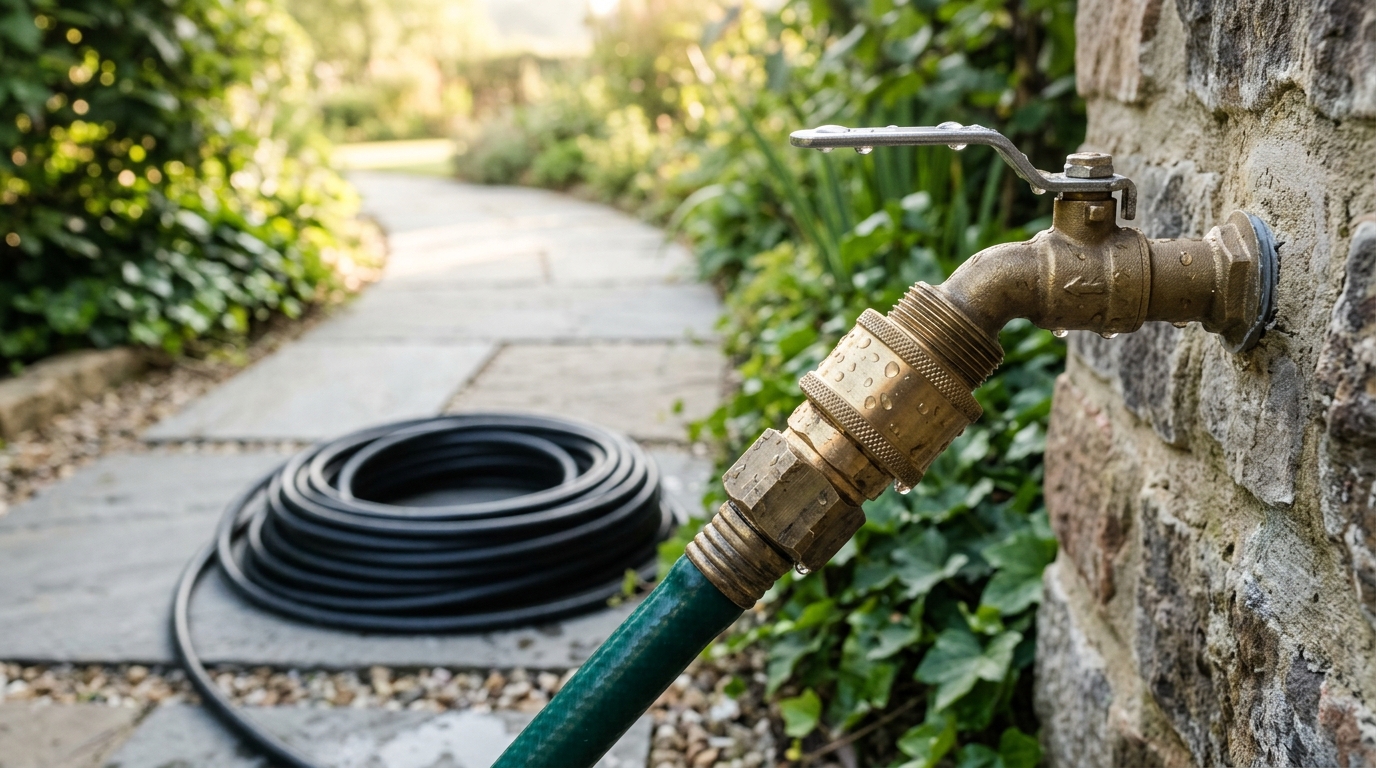
Now imagine putting your thumb over the end of the hose. The opening gets tiny, the water sprays out much harder, and suddenly you can knock away a clump of mud across the yard. You did not add more water to the hose—you simply squeezed the same water through a smaller space to give it speed and energy.
The Secret Behind the Pressure Washer
A pressure washer takes that exact thumb-over-the-hose trick and supercharges it with an internal pump and precision-engineered nozzles. Instead of relying on a heavy volume of water to wash dirt away, the machine relies on velocity—how fast and hard the water moves.
Here is why that makes such a big difference for water conservation:
- Tiny Nozzles, Controlled Flow: The openings on pressure washing tips are very small. Even though the water exits with intense energy, the actual amount of liquid passing through the nozzle per minute is much lower than an unrestricted outdoor spigot.
- Kinetic Energy Does the Heavy Lifting: In exterior cleaning, force does the scrubbing work so water volume does not have to. The pressurized spray breaks the bond between the dirt and the surface almost instantly.
- Speed Reduces Total Run Time: Because high pressure removes dirt in seconds rather than minutes, the machine only needs to run for a fraction of the time a standard hose would run to clean the same square footage.
Thinking in Total Gallons, Not Just Minutes
When thinking about water conservation, it helps to look at the total amount of water used to complete a job from start to finish. A standard garden hose running wide open delivers a steady flow of water at relatively low pressure. If you spend an entire afternoon trying to rinse off a large driveway, that hose is continuously running.
A professional pressure washing setup, by contrast, focuses high-pressure streams only where needed and shuts off the moment the trigger is released. Because the job is completed rapidly and directly, the total gallon count at the end of the day is often substantially lower than traditional rinsing methods.
Surface Cleaners: Spreading the Water Evenly
Professional exterior cleaning often uses specialized tools called flat surface cleaners for large flat areas like driveways, sidewalks, and patios. These tools look like small lawnmowers with rotating spray bars housed underneath a round cover.
Inside the housing, two or three tiny nozzles spin in rapid circles inches away from the ground. This design keeps the water completely contained, prevents overspray, and cleans a wide path in a single smooth pass. By eliminating overlapping passes and keeping the spray at an optimal distance, surface cleaners maximize every droplet of water used.
Responsible Water Practices at Skinner Cleaning LLC
Conserving water while delivering exceptional results requires the right equipment, proper technique, and thoughtful preparation. At Skinner Cleaning LLC, we approach every outdoor cleaning project with respect for your property and the surrounding environment.
Here is how our process keeps water use responsible and effective:
- Targeted Pre-Treatments: We utilize specialized, eco-conscious cleaning solutions that break down algae, moss, and organic stains before pressurized water is applied. Letting safe detergents loosen the grime means we can rinse surfaces clean quickly without unnecessary water cycling.
- Matched Pressure and Tips: We calibrate our equipment specifically for each surface—using gentle, low-pressure soft washing on delicate siding and roofs, and calibrated high pressure on durable concrete. This prevents surface damage and avoids wasted run-off.
- Trigger-Controlled Efficiency: Water flows only when actively cleaning, preventing idle water loss.
Pressure washing does not have to mean wasting water. With the right techniques and equipment, Skinner Cleaning LLC brings your outdoor spaces back to life efficiently, effectively, and responsibly.