
Window Cleaning
Is It Too Dangerous to Clean High Windows? How the Pros Stay Safe
A reassuring guide to the smart tools and safety gear that make washing tall windows safe and routine.
September 5, 2026
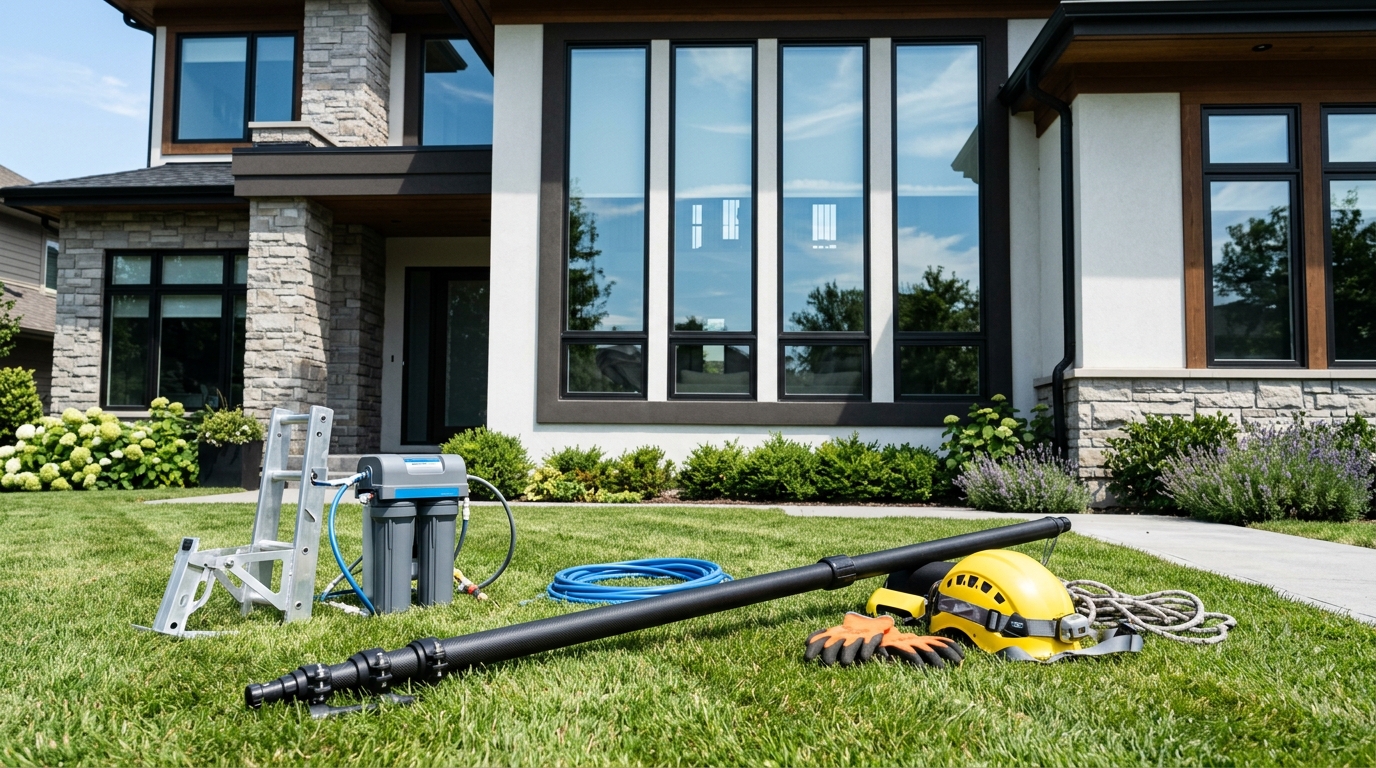
If you have ever stood in your yard, looked up at a giant second-story bedroom window or a high foyer skylight, and felt your stomach do a little flip, you are not alone. When a window is twenty or thirty feet up in the air, it is completely normal to wonder: Is cleaning that even safe, or is it way too dangerous?
The quick answer is reassuring: yes, really high windows can be cleaned safely! Professional cleaners do not rely on daredevil stunts or risky balancing acts. Instead, they use specialized engineering, physics, and safety equipment designed specifically to keep everyone safe on the ground or securely protected in the air.
The Secret Weapon: Cleaning High Glass from the Ground
Here is something that surprises a lot of people: most of the time, window cleaners do not even have to leave the grass to clean a high window. Thanks to modern equipment, the safest way to work at great heights is to keep your feet firmly planted on solid earth.
Technicians use an incredible tool called a water-fed extension pole. Think of it like a super-lightweight, carbon-fiber fishing rod that can extend straight up into the air—sometimes forty or fifty feet high. Carbon fiber is the same material used in race cars and aerospace engineering because it is extremely strong but weighs almost nothing, so the cleaner has full control over where it goes.
At the very tip of this long pole is a soft brush and a tiny water jet. A hose connects the pole to a special mobile water tank. The cleaner can scrub away dirt, pollen, and spiderwebs while standing comfortably in the driveway or lawn, looking up and guiding the brush with complete accuracy.
Why Pure Water Makes Tall Windows Easy
You might wonder: If they are washing the glass from thirty feet away, how do they wipe it dry without leaving ugly streaks?
The secret is purified water. Tap water contains tiny dissolved minerals like calcium and magnesium. When regular water dries on glass, those minerals get left behind as spots. But professional exterior window systems filter the water through multi-stage purification units, stripping away every single mineral.
When this ultra-pure water rinses the glass, it attracts dust like a magnet and sheets right off. Because there are no minerals left in the water, the window air-dries 100% crystal clear. That means no one has to climb up high with a towel or a squeegee to dry the surface by hand.
What Happens When a Ladder Really Is Necessary?
Sometimes a window is tucked behind an overhang, inside an enclosed sunroom, or shaped in a way where a pole cannot reach. In those cases, a ladder is used—but not the shaky aluminum step-stool you might have in the garage.
Professional ladder setups include several heavy-duty safety features:
- Ladder Levelers: Yards are rarely completely flat. Levelers attach to the bottom ladder legs and adjust individually so the ladder stands completely straight, even on uneven dirt or slopes.
- Standoff Brackets (Ladder Stabilizers): These wide, padded metal arms attach to the top of the ladder. They span out wider than a window frame, bracing firmly against the solid siding of the house instead of resting against fragile glass. This prevents the ladder from sliding sideways or tipping.
- Non-Slip Footing: Rubberized swivel feet bite into dirt, gravel, or concrete to keep the base locked firmly in position.
- The Three-Point Contact Rule: Whenever a technician moves on a ladder, they maintain at least three points of contact at all times (two feet and one hand, or two hands and one foot).
Harnesses and Anchors for Complex Rooflines
For homes with three stories, steep roof pitches, or hard-to-reach architectural angles, safety steps up to full fall-protection gear. This is the exact same type of equipment used by rock climbers and construction crews.
Technicians wear heavy-duty body harnesses made of reinforced nylon webbing with secure steel buckle connections. These harnesses attach via dynamic safety ropes and shock-absorbing lanyards to rated roof anchors or secure tie-off points. If someone were to lose their footing, the harness and lanyard catch them instantly, preventing a fall.
Why Homeowners Should Leave Tall Windows to the Pros
While looking up at high glass can feel a bit nerve-wracking, the danger only really happens when someone tries to tackle it without the right equipment. Trying to balance on an uneven surface, stretching sideways from a short ladder, or leaning out of an upstairs window with a spray bottle is genuinely unsafe.
Professional window cleaners train extensively on equipment inspections, weight distribution, and environmental awareness—like checking for nearby power lines or sudden gusts of wind before lifting an extension pole.
How to Help Your Cleaners Work Safely
If you have high windows scheduled for a wash, you can help make the job smooth and safe by taking a few simple steps around the yard beforehand:
- Move outdoor toys, garden hoses, patio chairs, and potted plants away from the base of the walls.
- Trim back thick tree branches or thorny bushes that press directly against the lower glass.
- Keep pets and small children indoors while the crew is actively working with tall poles and ladders.
- Close and latch all upper-story windows tightly before cleaning begins.
High windows may look intimidating from down below, but with carbon-fiber poles, pure water filtration, and rock-climbing-grade safety harnesses, keeping tall glass shining bright is safe, controlled, and stress-free.