
Pressure Washing
Is Pressure Washing Concrete a Good Idea, or Could It Crack?
A simple, friendly look at how high-pressure water cleans hard surfaces without breaking them.
September 1, 2026
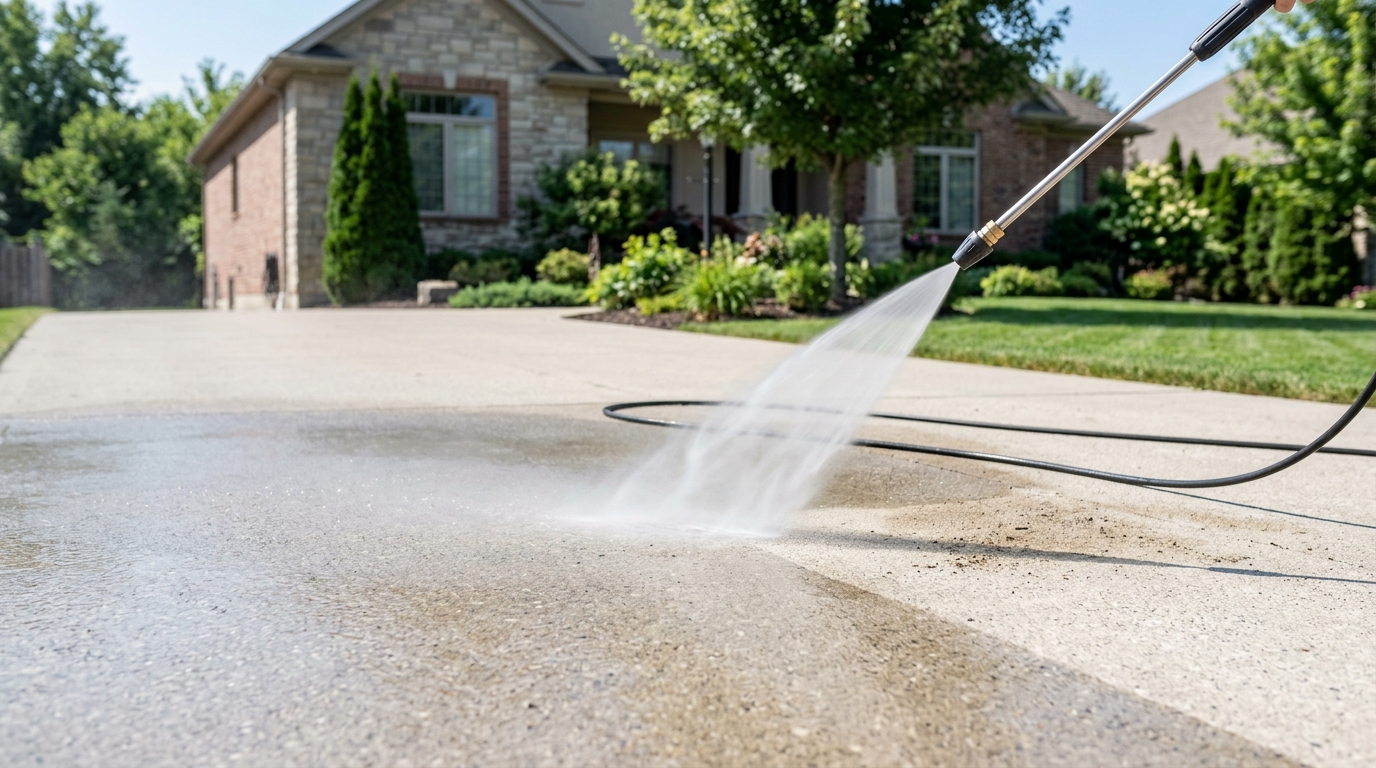
If you have ever seen a pressure washer blast away dark grime from a driveway, it looks almost like magic. In just a few seconds, gray stone turns bright and clean again. But seeing all that powerful water spray out can make you wonder: is water that strong safe for concrete, or could it actually crack the ground right beneath your feet?
Can Water Really Break Solid Concrete?
The short answer is no, regular pressure washing will not suddenly snap a solid slab of concrete in half like a dry twig. Concrete is heavy, solid, and made to support huge pickup trucks and cars every single day. A stream of water—even a fast one—does not have enough brute force to shatter a thick slab of solid concrete.
However, there is a small catch. While water will not crack a healthy slab in two, using the wrong pressure or holding the nozzle way too close can scratch or chew up the top layer. Let's look at how concrete is built to understand why that happens.
Think of Concrete Like a Giant Oatmeal Cookie
To understand how water interacts with concrete, imagine a giant oatmeal raisin cookie that has dried out until it is rock-hard.
- The rough stones (the oats and raisins): Concrete is mostly made of sand, gravel, and crushed stone. These are called aggregates, and they give the slab its heavy-duty strength.
- The cement paste (the cookie dough): Cement mixed with water acts like glue. It coats every piece of stone and hardens into a smooth top skin called the "cream layer."
When concrete cures, that smooth cream layer sits on top, keeping everything locked together tightly. If someone uses a pressure washer that is far too powerful—like a pin-point red nozzle held an inch away—it behaves like a tiny water-chisel. Instead of cracking the whole slab, it can peel away that smooth top layer and expose the rough gravel underneath. That is called surface etching, and it makes the concrete look rough and uneven.
How Pressure Washing Cleans Without Damaging
When done properly, pressure washing does not use water like a sharp knife. Instead, it uses water like millions of microscopic brooms brushing the surface at the exact same time.
Here is what makes pressure washing work safely and effectively on outdoor flatwork:
- The right nozzle spread: Instead of focusing the water into a needle-thin jet, safe cleaning uses fan-shaped spray tips. A 25-degree or 40-degree tip spreads the water out into a wide sheet, distributing the push evenly across the surface.
- Consistent distance: Keeping the spray wand at a steady distance from the ground (usually around ten to twelve inches) prevents too much force from landing in one tiny spot.
- Balanced pressure: Residential driveways and walkways generally need moderate pressure combined with good water flow to lift dirt, rather than maximum pressure that could scour the finish.
- Surface cleaners: Many professionals use a round, dome-shaped tool called a surface cleaner. Inside the dome, two little spray nozzles spin around rapidly on a bar. This keeps the distance and pressure completely even across every square inch, preventing lines, streaks, and surface gouges.
What About Concrete That Already Has Cracks?
You might look at a sidewalk or patio and notice thin hairline cracks that are already there. Did water make those?
Most cracks in driveways come from two things: natural settling of the soil underneath, and expansion from hot and cold weather. Concrete expands slightly when the sun bakes it in the summer and shrinks when winter comes. Over time, that movement creates tiny cracks.
When you wash concrete that already has cracks, water will not make the crack split open like an earthquake. However, you should avoid blasting high-pressure water directly down into deep cracks. Blasting straight into an open seam can wash away the sand or soil packed under the slab, which leaves an empty pocket beneath the concrete. Gentle rinsing around existing cracks keeps the ground underneath stable and secure.
Why Cleaning Concrete Is Actually a Great Idea
Far from hurting your hardscaping, routine washing is one of the best things you can do to protect it. Over time, driveways collect dirt, moss, algae, and fallen leaves. Here is why washing that away helps:
- Stops slip hazards: Green algae and dark mold turn super slick when wet. Washing them away keeps walkways safe for walking, running, and playing.
- Prevents trapped moisture: Mats of moss act like wet sponges pressed against the stone. By holding water against the concrete, moss can speed up surface wear during freezing winter weather.
- Lifts corrosive stains: Car fluids and decaying plant tannins can slowly soak into the pores of the concrete. Regular cleaning washes out those pores before deep discoloration sets in.
The Golden Rules for Safe Concrete Washing
If you want clean, bright walkways without any worries about surface wear, keep these simple guidelines in mind:
- Never use a 0-degree pinpoint tip on concrete: Those red tips concentrate all the force into a tiny beam that can easily etch lines into the cream layer.
- Keep the wand moving: Never hold the spray wand completely still in one spot for several seconds. Sweep it smoothly back and forth across the slab.
- Let gentle cleaners do the heavy lifting: Using mild, surface-safe detergents loosens the dirt first, so the water spray only needs moderate pressure to rinse everything away.
- Check the age of the concrete: Brand-new concrete needs time to fully cure and gain its strength. It is usually best to wait at least a year before giving a brand-new driveway its first deep pressure wash.
When handled with care, proper nozzles, and balanced pressure, washing your concrete is completely safe. It clears away built-up grit and keeps your driveways, patios, and sidewalks looking fresh and welcoming for years to come.