
Concrete Cleaning
The Mystery of the Garage Floor: Why Won't Those Dark Stains Go Away?
Put on your detective hat to find out what makes garage concrete hold onto stubborn spots—and how deep cleaning lifts them away.
August 26, 2026
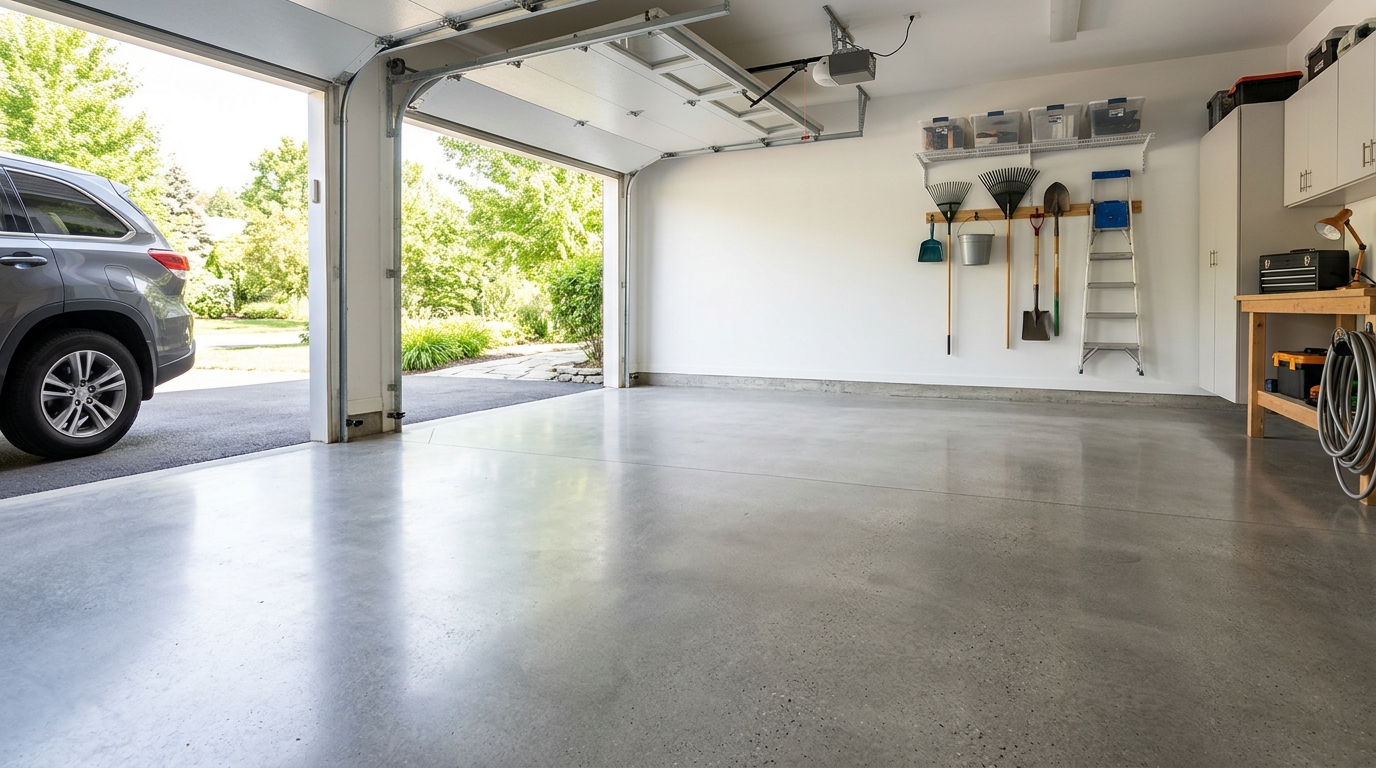
Have you ever looked down at your garage floor and noticed weird, dark patches that look like shadows that forgot to leave? You grab a garden hose, some dish soap, and a scrub brush, scrub until your arms feel like jelly, and let it dry—only to find the exact same dark spots staring right back at you.
It feels like a baffling mystery. Why does the garage floor refuse to give up those stubborn marks? Let's grab a magnifying glass, investigate how concrete works, and uncover what is really hiding beneath the surface.
Clue Number One: Concrete Is Actually a Giant Sponge
To solve this mystery, we first need to understand the crime scene: your concrete floor. When you walk on concrete, it feels solid, hard, and as tough as a boulder. But if you were to zoom in with a powerful microscope, you would see something totally different.
Concrete is full of millions of microscopic holes, air pockets, and tiny interconnected tunnels. In the world of science, we call this being porous. Think of concrete like a hard, stone sponge. When something liquid spills on top of it, gravity pulls the liquid down into those tiny micro-tunnels where a regular mop or garden hose simply cannot reach.
The Suspects: What Made Those Dark Marks?
Now that we know concrete has secret hiding spots, let's identify the usual suspects responsible for making those dark stains.
Suspect 1: Sneaky Vehicle Fluids
Your car, lawnmower, or weed trimmer relies on fluids like motor oil, transmission fluid, and grease to keep their metal parts moving smoothly. Sometimes, tiny drops leak onto the floor.
Motor oil is thick, dark, and greasy. Because oil and water do not mix, rain or hose water simply rolls right over oil spills. When oil sits on concrete, it slowly sinks deep into the pores. As dirt and dust blow into the garage, they stick to that sticky oil layer, creating a dark, persistent blotch that resists basic scrubbing.
Suspect 2: The Rusty Metal Reaction
Have you ever left a metal paint can, a steel toolbox, or a snowy bicycle sitting on the garage floor? When moisture in the air mixes with iron or steel, oxygen creates iron oxide, which we commonly call rust.
Rust doesn't just sit on top of the concrete like spilled flour. It dissolves into the water droplets and seeps into the pores, chemically bonding with the minerals inside the concrete. Once the water dries, the rusty, reddish-brown or dark mineral stain remains trapped deep within the stone matrix.
Suspect 3: Grime, Road Salt, and Tire Marks
When you drive home on a hot summer day, your car tires are scorching hot. As the warm rubber rolls onto the cooler garage floor, it can leave behind a thin layer of plasticizers and rubber compounds. Add in winter road salts, dirt from the street, and exhaust soot, and you get a tough layer of ground-in traffic grime that darkens large sections of the floor.
Why Basic Rinsing Won't Solve the Mystery
Why doesn't a standard hose and a bucket of sudsy water solve the problem? There are two main scientific reasons:
- Surface Tension and Water Trapping: Water has surface tension, meaning water molecules like to stick together. Water alone cannot easily squeeze into microscopic concrete tunnels to push out thick, stubborn oils.
- Chemical Bonding: Certain fluids, such as old rust and oxidized oils, form bonds with the alkaline minerals in concrete. Rinsing the surface only cleans the very top layer, leaving the dark pigment safe and sound just below the surface.
How Deep Cleaning Solves the Case
To remove these trapped marks, you have to break the bond between the stain and the concrete pores. Professional cleaning works through a combination of science and mechanics:
- Emulsification: Specialized cleaning solutions act like microscopic crowbars. They surround the oil particles, break their grip on the concrete, and lift them into a liquid suspension so they can be washed away.
- Controlled Heat and Agitation: Warm water and mechanical rotary scrubbers help break down hardened greases and road grime much faster than cold water from a tap.
- Targeted Chemistry for Rust: Mineral stains require safe, balanced cleaning agents that neutralize the rust molecules without etching or damaging the concrete slab itself.
- High-Flow Extraction: Powerful surface cleaners apply steady pressure across the entire slab to pull contaminants out of the microscopic pores evenly, preventing zebra stripes or patchy spots.
Revive Your Garage Floor with Skinner Cleaning LLC
If your garage floor has accumulated years of mysterious dark spots, tire marks, and stubborn fluid stains, you don't have to spend your weekend on your hands and knees with a wire brush. Skinner Cleaning LLC provides professional concrete and surface cleaning solutions designed to lift embedded buildup and refresh weathered slabs.
Using commercial-grade equipment and proven surface-cleaning methods, Skinner Cleaning LLC targets deep-set oils, grime, and ground-in dirt to bring a tired garage floor back to a clean, uniform look. Reach out to Skinner Cleaning LLC to discuss your garage floor cleaning project and restore the brightness of your concrete today.