
Concrete Cleaning
Why Is My Pool Deck So Slippery When Wet? The Science of Deck Slime Explained
Discover the microscopic reasons why wet concrete turns slick and how professional washing restores safe traction.
August 17, 2026
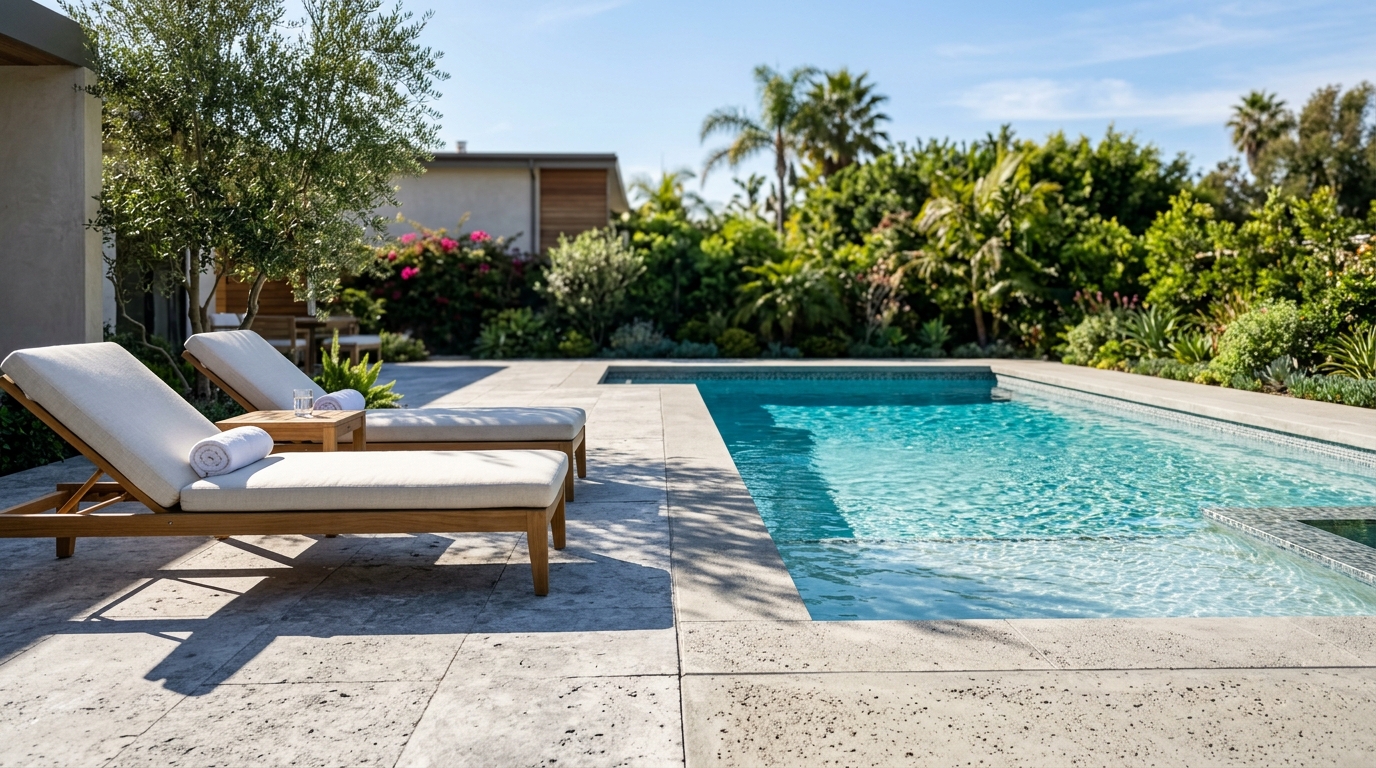
Have you ever stepped out of the pool on a hot summer afternoon, set your bare foot down on the concrete, and felt like you were suddenly ice skating? Concrete, pavers, and stone are naturally textured materials—so why does adding a little water suddenly turn a backyard deck into an accidental slip-and-slide? The answer isn't just moisture; it is a fascinating bit of biology happening right beneath your feet.
The Science of Friction: Why Rough Surfaces Grip
To understand why decks get slick, let's take a quick look at how friction works. Think of your dry concrete deck like microscopic sandpaper. Even if it feels relatively smooth to the touch, zooming in under a powerful microscope reveals peaks, valleys, craters, and rough edges. When the rubber sole of your flip-flop or the ridges on the bottom of your bare foot press against those tiny concrete peaks, they interlock. That mechanical interlocking creates friction, which gives your feet traction and keeps you upright.
When clean water splashes onto clean concrete, some friction is lost because water acts as a mild lubricant. However, clean textured concrete usually still provides plenty of grip. If your pool surround feels greasy, oily, or dangerously slick, something else is living on top of the stone.
The Invisible Invaders: Meet Biofilm and Algae
The true culprit behind slippery pool decks is an invisible microscopic army of algae, bacteria, and mold forming something scientists call a biofilm.
Think of biofilm like the plaque that builds up on your teeth overnight. When single-celled algae spores and bacteria drift through the air and land on your patio, they find an ideal habitat. Outdoor pool decks provide everything these microscopic organisms need to thrive:
- Constant Moisture: Splashes from swimmers, lawn sprinklers, and morning dew keep the stone damp.
- Abundant Sunlight: Algae use photosynthesis to turn sunshine into energy.
- Nutrient Buffets: Pollen, dirt, leaves, sweat, and spilled sunscreen provide endless food for microbes.
The "Jelly Layer" Phenomenon
Once algae and bacteria colonize the tiny pores of your pool deck, they do not just sit there—they build miniature protective shelters. They secrete a sticky, microscopic slime made of sugars and proteins (known in science class as extracellular polymeric substances, or EPS).
This protective slime shield does two things:
- It locks in moisture so the algae don't dry out under the hot sun.
- It glues the colony tightly into the microscopic pores of your concrete or pavers.
When the deck is completely dry, this biological film hardens and might just look like a slightly dull or discolored patch of stone. But the moment water hits that dried layer, the slime instantly absorbs moisture and swells up like tiny, microscopic water balloons or microscopic jelly marbles. Your foot never actually touches the rough concrete peaks; instead, you glide across a slick layer of hydrated micro-slime.
Why Garden Hoses and Quick Rinses Fail
Many homeowners try to wash away slippery spots with a regular garden hose nozzle, only to find the deck gets even slicker. A quick spray of water simply hydrates the biofilm without dislodging it. Because the organisms anchor themselves inside the microscopic pores of the stone, plain water rinsing merely feeds them and activates their slick protective coating.
Even chlorinated pool water isn't enough to sanitize the deck. Once pool water splashes onto the hot patio, the chlorine evaporates quickly under UV light, leaving behind plain water and warmth—the exact recipe algae loves.
How Skinner Cleaning LLC Brings Your Deck Back to Life
Getting rid of deck slime requires more than just water—it requires lifting the organic biofilm completely out of the surface pores so your deck's natural texture can do its job.
That is where Skinner Cleaning LLC comes in. Our specialized exterior cleaning methods target the root cause of the slipperiness:
- Targeted Cleaning Treatments: We use gentle, effective cleaning solutions designed to neutralize algae, mold, and bacterial biofilms down at the root level, breaking their biological bond with your hardscapes.
- Balanced Pressure Washing: Using calibrated surface cleaners, we lift away dirt, sunscreen oils, and decomposed biological matter evenly, avoiding the streaks or surface damage that aggressive DIY pressure washing can cause.
- Restored Traction: By completely clearing the microscopic valleys and pores in your concrete, pavers, or stone, we restore the natural friction of your deck materials.
A clean pool deck is not just about curb appeal—it is about creating a secure, comfortable outdoor space where your family and guests can walk with confidence. If your pool area is starting to feel slick underfoot, let Skinner Cleaning LLC deep-clean the surface and restore the beauty and safety of your outdoor living area.