
Concrete Cleaning
Why Does Your Sidewalk Turn Green and Slippery? The Science Behind the Slime
A simple, fun look at the tiny organisms living on your walkway and how regular cleaning keeps your home safe.
September 7, 2026
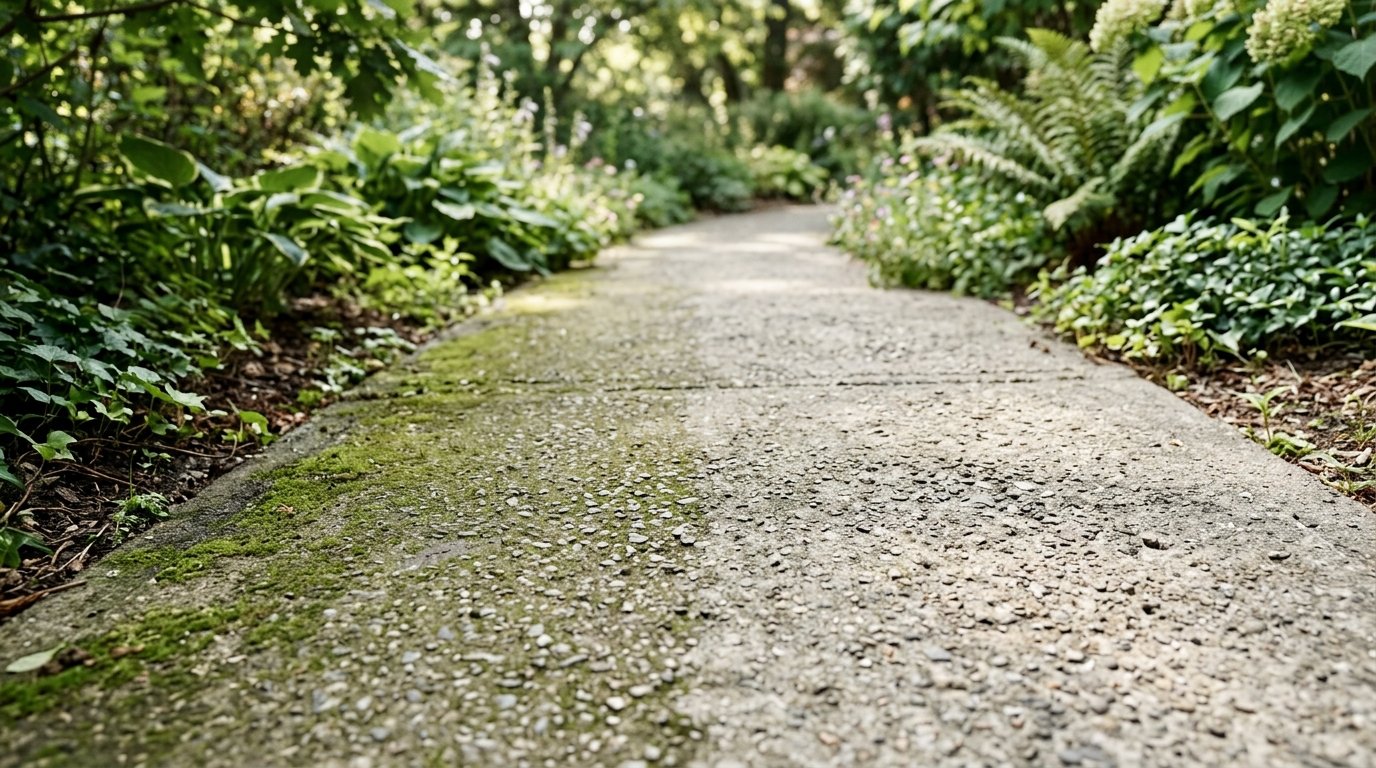
Have you ever stepped onto your front walkway on a damp morning and felt your foot slide right out from under you? If you looked down, you probably noticed your crisp gray concrete had taken on a bright green, slick coating. It is a common mystery for homeowners, but the culprit is not magic—it is an active, microscopic world living right on your pavement.
When concrete surfaces stay damp and shaded, nature moves in quickly. Understanding why your sidewalk transforms into a miniature green slip-and-slide involves a bit of everyday biology, a touch of physics, and a practical look at how outdoor moisture affects your home’s hard surfaces.
Meet the Living Green Blanket: Algae and Moss
The green tint on your sidewalk is not paint or mineral staining; it is made of living organisms. The two most common culprits are microalgae and moss.
- Algae: Algae are simple, plant-like organisms that thrive in water. While we often picture algae floating in ponds, terrestrial algae can live on land as long as there is moisture. They float through the air as microscopic spores, land on your concrete, and start multiplying once water arrives.
- Moss: Mosses are small, rootless green plants that grow in dense, soft clumps. They love cool, damp environments and can anchor themselves inside tiny imperfections on solid surfaces.
- Biofilm: When algae, bacteria, and microscopic fungi team up, they create a thin, sticky layer known as a biofilm. This biological film protects the organisms from drying out, allowing them to cling tightly to the concrete.
The Concrete Recipe: Why Walkways Become Perfect Habitats
To understand why this growth happens on your property, it helps to think of concrete as a hard sponge. Even though concrete feels rock-solid under your shoes, it is full of microscopic pores and tiny tunnels.
When rain falls, sprinkler systems spray, or outdoor spigots drip, water seeps directly into those tiny pores. If a section of your sidewalk sits under the shade of a large oak tree, the north side of your house, or dense landscaping, sunlight cannot reach the pavement to evaporate the trapped moisture. Once you combine continuous dampness, porous concrete, and spores carried by the wind, you have the ultimate recipe for a thriving colony of greenery.
The Physics of the Slip: Why Is It So Slick?
Walking safely across concrete relies on friction—the grip created when the textured surface of your shoe meets the textured surface of the pavement. When green microalgae and biofilms cover that surface, two things happen that ruin your traction:
First, algae and biofilms produce a natural gelatinous coating designed to lock in moisture. When this gel gets wet, it behaves like oil on glass. Second, the biological layer completely fills in the microscopic texture of the concrete, smoothing out the rough surface that your shoes need to grip. Stepping onto wet biofilm is very similar to stepping directly onto a peel on a polished floor—your foot loses friction instantly.
The Role of Outdoor Water Runoff and Drainage
Managing moisture around your property is one of the most effective ways to slow down the return of slippery green patches. Sidewalks often turn green because of preventable water patterns:
- Misdirected Downspouts: Gutter downspouts that empty directly onto concrete pathways keep the surface constantly wet after a storm.
- Irrigation Overspray: Sprinkler heads that spray concrete instead of turf give algae a daily watering schedule.
- Poor Grading: Walkways that sit lower than the surrounding soil allow water and organic debris to pool along the edges.
- Dripping Outdoor Fixtures: Slow drips from hose bibs or outdoor plumbing lines create localized damp zones where moss thrives.
Clearing the Path: Restoring Traction and Safety
Rinsing a green sidewalk with a garden hose rarely solves the problem because algae and biofilms are built to cling tightly to porous surfaces. A quick spray may rinse away surface dirt, but the living roots and microscopic spores remain embedded deep within the concrete pores, ready to turn green again within days.
Thorough exterior washing removes the slick biofilm down to the base of the concrete texture. By lifting out the organic material, the natural grit and roughness of the concrete are restored, bringing back the friction needed to walk safely.
Pairing regular surface washing with simple yard adjustments—such as trimming low tree branches to let sunlight in, adjusting sprinkler spray patterns, and ensuring water drains away from walkways—keeps your entryways looking bright, clean, and slip-free throughout the wet seasons.